Head on over to my new blog: trailblazingwithcp.com 🙂
Where lifeintheblueridges has been, and what’s next!
6 MayIt’s been quite a while since I’ve written a blog post, and that’s mostly because I have been focusing solely on my final year of college. As of last Thursday, I completed my last final exam of my undergraduate career. I’ll be graduating in just 4 days with a Bachelor of Arts in Psychology. I truly can’t wait to have that diploma in my hand and have my family and friends around me to celebrate!
Go confidently in the direction of your dreams. Live the life you have imagined.-Henry David Thoreau
What’s next in my life: Graduate school! Starting in August, I will attend UNC Charlotte’s MSW (Master’s of Social Work) program, and I truly can’t wait! One of my dreams of helping others is finally going to be coming true, and I am so ready for the journey ahead. Though it will be sad to close the UNC Asheville chapter of my life, I am anxious to start the next phase of my life in a new city which holds new opportunities and the chance to bring more wonderful people into my life. What could be more wonderful than that, you ask? Well…finally getting to focus solely on what I love and long to do for the rest of my life: helping others (hopefully the special needs population).
Don’t ask what the world needs. Ask what makes you come alive, and go do it. Because what the world needs is people who have come alive.-Howard Thurman
Where lifeintheblueridges has been: Since its creation in November 2011, this blog has been an incredible gift to me in so many ways. Within the first few months of starting my blog, I connected with many people like me, aspiring writers. More than that, though, I was welcomed with open arms into a community I never knew I needed. Because of constant support and encouragement from those who knew me not personally, but simply through my writing, I finally reached a point in which I was able to start something I never thought I’d be able to do: the sharing of my story of living with Cerebral Palsy. In January of 2012, I began receiving positive feedback from fellow bloggers and connecting with others who either have Cerebral Palsy or another disability or know someone who does. Because of all the positive feedback, in January of 2012, I started writing my memoir of living with Cerebral Palsy. If it hadn’t been for the encouragement from the blogging community and other friends, I don’t know if I would have ever had the courage to open up about my experiences of living with CP. Since opening up, however, I have connected with so many people who’ve told me to keep on sharing. More recently, I’ve also been giving talks to elementary and middle schools in Buncombe County regarding my experiences of living with CP, and more specifically, the bullying experiences I had as a child as a result of my Cerebral Palsy. I am incredibly grateful for the opportunities I’ve received to talk with so many kids about disabilities and bullying, especially because they have allowed the kids to learn more about what it’s like to live with a physical disability and it’s given them the opportunity to ask any questions they want about me and my disability (which I fully support since I know there are so many kids who are curious). Overall, through this blog, I have gained the courage to open up about my experiences and have developed the desire to share my story with others. However, I’ve also gained encouragers, supporters, fellow writers, beta readers fellow CPers, special needs parents…or more precisely, a community of people that is cheering me on currently and will continue to do so even after my memoir is eventually published (or that’s what I hope, anyway).
Where lifeintheblueridges is going: Beginning this July, I will no longer live in Asheville…no longer will I be nestled among these mountains I love. Therefore, the beloved lifeintheblueridges will be ending after this post. In the coming months, I’ll no longer be a college girl in Asheville. I’ll be even more than that…a graduate student in Charlotte! Therefore, though this blog has provided me with more than I ever thought possible…I’ll be creating a new blog, especially because I am about to close one door and open another. I am incredibly excited to begin a new blog journey, a blog that will solely focus on writing about my experiences of living with CP. Since this blog helped me to open up about my experiences, there’s NO WAY I’m going to stop sharing my story and writing my memoir. I hope to be sharing my story and the writing process of my memoir even more on my new blog!
*As of right now, I am not sure when my new blog will be up and running, but I will make one more post on here once the new blog is live so that everyone can continue following me and my story.*

Changing the Face of Disabilities.
24 FebLast semester, I had a professor who I really connected with on a more personal level. Though we discussed my role as a student, we also discussed a role I didn’t think I could inhabit so fully: my role as an advocate, especially for those with disabilities. One evening following my night class with this specific professor, we discussed my life, my future, and all the many obstacles I’ve faced to get to where I am today. It was an incredible conversation, one in which I truly felt heard, and it’s something I will never forget.
Specifically, after much discussion regarding my Cerebral Palsy, my past of physical therapy, surgery, pain and hardship, my professor mentioned how she had been wanting to talk about my disability with me for quite some time but didn’t know how to broach the subject with ease. However, once I completed a project for her class in which I discussed the topic of disability discrimination, she knew I was comfortable and wouldn’t mind hearing any questions she had.
As we talked about my life and my future aspirations of writing my memoir and becoming a social worker, I slowly began to realize I had gained a mentor. I had gained someone who not only supported and believed in me, but someone who pushed me to look more closely at myself and my potential. Since I have only truly connected on a more personal basis with one or two other teachers throughout my life, this experience was incredible. It gave me a chance to open up, to share my life, in a way I wouldn’t have otherwise been able to do if I hadn’t had the courage to open up about my disability through a big research project which was presented to the whole class. Specifically, during our conversation, my professor said, “Amelia, you have the power to completely change the face of disabilities.”
I have striived to be an advocate for others with disabilities since as a kid, I wished I had had a kind of mentor who I could talk to about the difficulties of living with a physical disability. In my opinion, having the chance to talk to someone who had been there would have really helped me, so I long to be that person for others. Therefore, when my professor told me I have the power to completely change the face of disabilities, I was floored. I truly felt proud to receive praise of such a high honor. The simple fact that someone believed I had the potential to achieve something so lofty was amazing.
Recently, I thought about what my professor said last semester, and how great it made me feel. As I mentioned that conversation to a friend recently, she said, “Amelia, there’s something you don’t see: you already do change the face of disabilities.” I stared at my friend, confused, not understanding what she meant. She explained by saying, “You change the face of disabilities just by being yourself. You bring awareness to what Cerebral Palsy is. You provide special needs families with the hope that it’s possible to overcome incredibly difficult obstacles. But you know what the best part is? You overcome it all with a smile on your face the determination to keep going no matter what.” The wonderful thing is I didn’t see how I was changing the face of disabilities just by being myself. I imagined I wouldn’t be able to do that until I aimed to do something more tangible, something I could point to and say, “Yes, I brought about that change.”
It’s caused me to realize that maybe being an advocate and lifting others up has many parts. Maybe it doesn’t just involve the tangible changes we can point to with pride. Maybe it’s the little things too: the connections I strive to make with the families of children with special needs at my internship, the talks about CP and bullying I’ve given at elementary schools, and the connections I’ve strived to make with others with special needs through my blog.
Recognizing my abilities to change the face of disabilities definitely isn’t easy. Maybe it takes hearing it from others before I start to believe it. However, as I’ve been told, I’m already doing it just by being myself. As of now, there’s only one way to go in order to continue along this path: forward. I don’t know all the answers. I don’t know the secret to living life with a physical disability without letting it pull you into despair and self pity. But I do know one thing: All I have ever been is myself. Maybe that’s the only secret that matters.
Why I Love Working With Dying Children.
2 DecI read an article recently by a woman who teaches poetry and prose to dying children. Throughout the article, the author regularly mentioned how a certain little boy’s death would one day prevent her from ever returning to work. That little boy became another little girl who became yet another child. They all faced something we don’t talk enough about: death. Eventually, the author mentioned how this work contains so much sadness and fragility, and yet it is also the work she could never dream of walking away from.
Ever since August of 2013, I have been interning with Arts For Life, a NC-based non-profit organization focused on teaching art to children and families battling serious illnesses and disabilities. Specifically, I work with two populations of children: children undergoing treatment for cancer and other blood disorders and children undergoing physical, occupational, or speech therapy. I began this internship for a variety of reasons. However, the main one was due to my previous hospital experiences. As a child, I had to undergo three intense surgeries, which later included intense physical therapy, and I spent all this time in the hospital. During this time, the one bright spot in all the days of physical pain, tears, and uncertainty was the weekly craft nights. For one hour every week, I got to focus on making an art project rather than dwelling on how much pain I was in, which exercises I needed to do, or an upcoming surgery. Having a chance to put all my energy into something completely outside of myself helped to decrease some of my anxiety. Some of those nights, I dare say I might have even been happy. Due to my enjoyable experiences with art projects in the hospital, I knew I wanted to provide these same opportunities for other kids in the hospital.
Ever since I started teaching art projects to kids in the hospital, I have loved every minute of it. I love seeing the regular kids every week who have finally gotten used to me and will come up and just start talking. I love watching the kids burst with creativity, coming up with an alternative project I hadn’t even considered. I love seeing the smiles on their faces when they finish their project and run to show their parents. I love finding new ways to teach the children. However, more than anything, I love being able to take in all the different lessons they’ve ended up teaching me without even knowing it.
They have taught me the true meaning of strength. They have taught me what it means to not let an illness define you. They’ve taught me how “art” and “perfect” are rarely in the same sentence, and that’s perfectly okay. More than anything, they’ve taught me the importance of noticing the small things. One little girl I know is battling cancer, and yet she is one of the happiest little girls I know. She smiles, she laughs, and she plays. Most importantly, she does one thing I believe we often forget. She notices every moment: every smile, every time of laughter, every speck of blue sky. She absorbs every single piece of life, soaking it all in. I try more and more each day to live like her, but I’ve got a long way to go.
Numerous friends have asked me how I am able to be around kids who are dying. And you know what my response is? “How could I not?” These kids need me. They need the chance to be able to fully express themselves. They need a positive person in their lives who can bring something good into their hospital experience. They need someone who cares. A few years ago, I never imagined that person could be me, and yet, here I am.
I have yet to lose one of the children I teach. The more I read the article written by the woman who teaches poetry and prose to dying children, the more I’ve begun to understand that we all deal with death in our own way. How I react to losing a child I teach may not be the same way one of the child’s nurses might react. That being said, the important thing to remember is even if I lose I child I teach, there are still tons of other children who need me. Though one day may feel quiet as I mourn the loss of a particular child I cared for, there will be more children coming to clinic the following day, and I need to be the best I can be for them. Being sad around them isn’t my job. If I’m sad, they’ll get sad. That’s why positivity is so important.
Teaching art to children with serious illnesses and disabilities is not easy, but it is the first thing I’ve ever done that’s given me a deep sense of purpose. Seeing the smile on a little boy’s face means I was part of his happiness. Having a little girl cling to my leg begging me not to leave warms my heart more than she will ever know. I just hope one day these children will know how much they have changed my life.
Be kind, for everyone you meet is fighting a hard battle.-Plato
Disability Discrimination: A Problem We Need to Talk About
15 NovThis week, I gave a presentation on disability discrimination in one of my college classes. I had been doing research for the past few months, and I enjoyed bringing this problem to light since it is very personally relevent. Therefore, I knew I had to share it with the blogging community as well
The Americans with Disabilities Act defines an individual with disabilities as someone who has a physical or mental impairment that does not allow them to perform one or more major life activities, and disability discrimination is the act of not viewing individuals with disabilities as fully functioning members of society whose voices deserve to be heard.
Disability discrimination occurs most commonly in the workplace, and it stretches across many different disciplines as well, such as psychology, law, and education. Within the field of psychology, discrimination is harmful for individuals with disabilities because it may lead to feelings of isolation, anger, depression, or anxiety. Within the field of law, disability discrimination is the least discussed type of discrimination law. Furthermore, within the field of education, the presence of disability discrimination perpetuates the feelings of exclusion found in school systems. Disability exclusion also increases fear aimed towards individuals who are different.
(from The Today Show)
The problem of disability discrimination is serious, and it influences individuals with and without disabilities. There is not just one group at fault. Each one of us is responsible for the persistence of this problem, and it is a problem that deserves to be discussed in order for individuals with and without disabilities to feel comfortable in the world in which they live.
But the question is: What can we do?
- At an individual level, we should strive to understand that instead of disabilities being something that causes these kinds of individuals to be seen as less deserving of being heard, the differences should be seen as a contributing factor to create a unique society with more perspectives available.
- At a university level, disability awareness events could be very beneficial. By providing awareness to disabilities, college students and faculty may be able to better understand the struggle of living with a disability, visible or invisible, which they may not have otherwise been exposed.
- We should use person-first language: “individual with disability” rather than “disabled individual.”
Disability discrimination is a serious global and ethical issue within our society today. Since I have a physical disability of Cerebral Palsy, I can attest to the importance of inclusion. My experiences of exclusion made me stronger, but the times I felt included helped shape me into who I am today.


Autmn in the Mountains
A Special Kind of Love
6 NovI promised myself I’d write about you eventually. I knew I would need to give myself a certain closure, while also leaving plenty of space for you in my heart, a space you will occupy for the rest of my life.
You carried me through my childhood. You saw the way people treated me, and you acted as a buffer between me and the rest of the world. When we were kids, I needed that buffer. I needed a safe space to go where I didn’t have to be face to face with my situation, while also not having to completely face the blows of reality either. You provided me with that space. Your presence in my life when we were kids was like a bubble I never wanted to leave because it was the one place I felt cared for, the one place I felt safe. Now, I’m no longer inside that bubble, but I find comfort in knowing it’s always a place I can still go if I am in need of reassurance.
Your presence in my life brings me to tears, both tears of joy and tears of sadness. I wonder how I ever got so lucky to have a friend as rare as you in my life. Someone who has known me since we were kids. Someone who knows everything I went through, and loves me just the same, if not more. Someone who has acted as my protector for as long as I can remember. Someone who took me to my first dance, who took me to my prom, and who would drop everything to be there for me. That kind of friendship is so incredibly rare, and the wonderful thing is how safe and cared for I feel, even when I’m just thinking of you. Therefore, my deep love for you makes sense. It brings me to tears because I know my love for you is not the same kind of love you have for me. It breaks my heart, but it doesn’t take away how I have always seen you. Truthfully, my feelings for you make sense. They truly do. I don’t know of anyone who could be cherished the way you cherish me and not develop deeper feelings.
Your belief in all that I am propels me forward. It gives me the strength to keep going when I feel like giving up, and it shows me there are people in this world that would do anything just to see me happy. Though I know that has been true for a long time, it took numerous deep conversations with you until I started to see it with my own eyes. You’ve allowed me to feel a kind of love I thought I’d never find. Sometimes, I wonder what would have happened between us if I would have recognized the love sooner. However, I don’t want to spend my life backpedaling. From this point on, I want to go forward. Forward towards a kind of love I will find one day. A kind of love I now know exists because you have shown me that even though certain forms of love are rare, they do exist.
Yes, I love you. I love you with all that I am, and I truly believe I always will. That’s the thing about first loves, right? They stay with you forever. Though you have not been my first love in the traditional relationship sense of the world, I think 15 years of friendship is a very special, though unique kind of relationship. And it’s been a special kind of love. The kind of love that has allowed me to grow and has given me support all at the same time. The kind of love that has provided me with a true sense of feeling safe, a sense of knowing I matter. The kind of love that is so rare, and yet so beautiful in all that it means.
Yet, because your presence in my life has brought me love, I am hopeful. I am hopeful that one day I will find the kind of love I wish you could show me now. Because in so many ways, you’ve done the best thing for us. Our friendship is too precious to take the risk of a relationship. You told me you vowed to never put yourself in a position where you might leave (since you had seen so many “friends” leave me, and knew how much it hurt me when they did). In its own way, that shows just how much your cherish me, and for that, I am eternally grateful.
I love you, and I always will. Your presence in my life has lifted me up while also breaking me down. Though that may sound sad, it’s good. You’ve helped me to experience an emotion I never thought I’d understand. Granted, though I am no closer to understanding it, I finally know the feeling of loving someone so much that it seems as if your heart might burst from happiness. And now, in this moment, I know what it means to love you, while also allowing other people in. For a while, I was afraid giving myself the opportunity to move on would mean I had to let you go, but that’s not what it means at all. It means loving you, keeping you in my heart, but making space in my heart for new possibilities. It means it’s possible to hold all kinds of love in your heart at once, and knowing there is always room for more.
My First Speaking Event: Cerebral Palsy and Bullying
30 OctLast Thursday, I had my first speaking event. I spoke to an elementary school book club in Asheville who had read Out of My Mind, in which the main character in the novel has Cerebral Palsy, the same disability I have. I was asked to come and speak about being bullied in school because of my Cerebral Palsy.
Below is the talk I read to the students and their parents of the book club (disclaimer: I have changed the names of people in order to protect confidentially):
When I was 7 years old, I played on a coach’s pitch baseball team, and there is one game I’ll never forget. I was up to bat, and my coach, Mr. Mark, stood on the mound smiling at me. He pitched the ball, and even though I hit the ball, it didn’t go far. It landed close to Mr. Mark’s feet. There was a player from the other team standing behind Mr. Mark, but Mr. Mark grabbed the ball and kept it away from the other player. At first, as I was running to first base, I didn’t know what was going on. I just knew that the first baseman hadn’t caught the ball yet, so I kept running. As I was almost near third base, the biggest grin spread across my face as I realized what Mr. Mark had done: he was giving me my very first home run. I remember running as fast as I could from third base to home plate, and as soon as my feet touched home plate, everyone in the crowd jumped to their feet and cheered for me. In that moment, I got to be a normal kid, and I got to feel the happiness that comes with completing a home run. If only for one night, I wasn’t a girl with Cerebral Palsy. I was a baseball player, a team member, and probably one of the happiest people in my hometown, if only for a moment.
Just like the character of Melody in Out of My Mind, I have Cerebral Palsy. Though I am not in a wheelchair or unable to talk like Melody, my Cerebral Palsy affects the way I walk because my muscles are really tight and because I don’t have very good balance. Because of being physically different, I was always an outcast in school. I had trouble making friends, and it was hard not having someone who knew what I struggled with on a daily basis. When I walk, it is very evident that I am different, and because of my visible differences, I was an easy target for bullying in school.
I had my first bullying experience when I was in kindergarten. At that age, I had to use canes to help me walk. Because of having to use canes, I wasn’t able to walk very quickly, and there was a girl named Ashley who enjoyed picking on me because she knew I wouldn’t be able to run away. Every day on the playground during recess, Ashley came up behind me and pulled my hair. It wasn’t a friendly pull either. She grabbed a fistful of my hair and yanked as hard as she could, laughing as I screamed in pain. She pulled so hard that I couldn’t even try to get away from her. Every day, I came home crying, and every morning, I woke up dreading having to go to school and see Ashley on the playground. I felt like crying when I realized I was completely alone. No one was sticking up for me, and it made me really sad. One day, my teacher, Miss Sandy, came up to me and told me to hit Ashley with one of my canes to help her realize that what she was doing was hurting me. See, Ashley was mentally disabled, so she didn’t know any better, and hitting her was one of the only ways Miss Sandy knew to make her stop. I never did hit Ashley though. I couldn’t do it. Hitting her would make me just like her: someone who wanted to hurt someone else. I don’t think Miss Sandy really wanted me to hit Ashley though. She was just trying to teach me the importance of trying to stand up for myself. In many ways, it felt impossible. How was I supposed to stand up for myself when it felt like I didn’t have a friend who would stand up for me?
I’ve struggled with forming friendships my entire life. As a kid, I wanted friends more than anything. I think that is the reason I never told a teacher that kids were making fun of me. I became afraid that once I told a teacher, the people who picked on me would call me a “tattle-tale” and the other kids would distance themselves even more. Because I was so physically different from the other kids in my class, all I wanted was to feel like I fit in. In my early friendships, many of the people who became friends with me were my friends out of pity. Even though they didn’t specifically tell me that, I could tell it was true. I could tell by the way they looked at me that they felt sorry for me. When I was young, I kept those friendships anyway because all I wanted was a place where I felt like I belonged. Many of those friendships didn’t last long though because most of the people who had been spending time with me left when they got tired of pretending to be my friend.
It wasn’t until I became friends with a boy named Tommy in first grade that things began to change. Tommy was the first person to visibly stick up for me. He confronted the people who picked on me, telling them it wasn’t okay to pick on someone who couldn’t help that she was different. Tommy’s friends laughed at him for sticking up for me, but he didn’t care. He stuck up for me anyway and was there for me no matter what. Tommy also saw the numerous people who became friends with me because they felt sorry for me. He knew how much that hurt me. Even though Tommy wasn’t disabled, he saw how I cried day after day when another person I thought was my friend just got tired of trying. Tommy’s presence in my life didn’t stop other kids from picking on me, but I began to feel a little less alone. Even now, I don’t have many friends. However, the few friends I do have are incredibly close to me, and I am happy to say that one of those friends is still Tommy.
When I was in fifth grade, I took a required PE class. In my PE class, dodge ball was typically the game of choice. Every week in PE, I was chosen last for dodge ball. I even remember one particular day when one of my friends, Allie, was the team caption. This made me excited because I thought: Yes, finally! I won’t be picked last because Allie will choose me since we are friends. The team picking began, and I waited with excitement for Allie to say my name. I looked towards her with a smile on my face, and my smile faded as I realized she was picking everyone else but me. Finally, it came down to Miranda, a girl who had just broken her leg, and me. It was Allie’s turn to pick, and I started to inch towards her. And then you know what happened? She chose Miranda over me! Miranda, the girl no one liked because she was so mean, and the girl who couldn’t even move as well as me because she had broken her leg. I couldn’t believe it!
As I got older, I thought the bullying would stop, but it didn’t. The summer after my sophomore year in high school, I attended a creative arts camp. One day I was walking back from a creative writing class, and out of the corner of my eye, I saw a girl named Lauren imitating the way I was walking. I turned to her and said, “Hey, what are you doing?” “Imitating the way you’re walking,” Lauren said. When I asked her why, she explained that she was supposed to observe people as an assignment for her theatre class. Even though I told her she hurt my feelings, Lauren didn’t listen. As I walked away, I watched as she laughed and continued to imitate me. I ran back to my room and cried, so sad and frustrated that I was still getting picked on. Even at an older age, getting picked on hurt just as much, if not more. Lauren knew what she had been doing. She saw how I cried in front of her, and yet she still continued to imitate me and laugh at me. I couldn’t understand why she would be so mean on purpose. I ended up telling a staff member about what happened, and she contacted the teacher to find out that it was never a class assignment. The next day, though, something good happened. Lauren did the one thing I never thought she would ever do: she said she was sorry.
Being bullied, either physically or emotionally, is hurtful for anyone, but it’s especially hurtful if someone bullies you for something you have no control over, like a physical disability. My bullying experiences have affected me my entire life. I remember the details of every bullying experience I’ve ever had. I remember how alone and broken they made me feel, and how it seemed like the bullying would never stop. Typically, kids in school try to be different because they don’t want to blend in with the crowd. For them, it’s important to stand out. In my case, I have always been incredibly different, and all I have ever wanted was to be normal. My differences have never stopped me from trying to be as independent and normal as possible though. I have Cerebral Palsy, and I am a survivor.
Speaking at this event was an incredible experience. I was nervous to speak about my bullying experiences since they were a part of my life I had never verbally discussed before. However, it was such a relief to finally talk about being bullied, and it gave me a sense of closure. It was also wonderful to hear from the kids in the book club and answer their questions. One girl in particular asked what my best grade in school was and what was my worst. It truly made me smile because I realized how wonderful it is to hear questions from kids. They make connections many of us as adults seem to have lost as we have gotten older, or maybe kids are just never nearly as shy to ask whatever seems to pop into their head. Either way, it was a great evening. I have even been asked to come back to that same elementary school to speak to the fifth graders, and my contact information has been passed on to two other elementary and middle schools in Asheville. I suppose it’s time to make myself some “business” cards!

Finding Determination Through Fear.
19 OctA few days ago I was talking with a friend of mine, and he asked me to explain my absolute worst fear in life. Though some classic answers popped into my head, like ending up alone and losing the people I love, I knew my absolute worst fear. I tried to say it, but couldn’t. I felt like I was about to cry. However, after a period of silence stretched over us like a blanket, I finally spoke.
“I’m afraid of the day when I’ll no longer be able to walk.”
I spent my entire childhood learning to walk so I could be as independent as possible, despite my Cerebral Palsy. Before my intense operations, I learned to walk in my own way, my knees knocking together as I put one foot in front of the other. During the years I spent on a t-ball team, I loved the feeling of running to first base. Even though I typically got out before making it to first base, I ran with all my heart just like everyone else on my team. I ran in my own way, but it never stopped me from trying.
After my first operation at the age of 10, I had to completely relearn to walk after having my femurs straightened out and kept in place with rods. One year later, when I got the hardware removed that was placed during my first operation, I had to relearn to walk yet again. See, not walking was never even an option for me. I wanted to be like the other kids my age, and to do that, I had to be able to walk. I had to be as normal as I possibly could. Even when I was faced with physical pain that made me want to curl into myself and give up all together, I kept going. Every day, I literally walked towards my own independence, one step at a time.
Because I spent so much of my life struggling, and ultimately succeeding, to walk, the thought of reaching the day when I’ll no longer be able to walk is completely terrifying. In so many ways, when I reach that day, it will feel like a kind of giving up. Though I plan to walk for as many more years as I can, I am scared of the day when the pain will just be too much, when walking will be putting too much strain on my body. It’s especially frightening because I know how much physical pain I’m in on a daily basis currently. The realization that I am in so much physical pain and I’m only 21 is terrifying. Trying to imagine my level of pain when I reach age 30 is nearly impossible.
That is one great thing about fear though. It has the ability to help us find the determination and strength we didn’t know we had. Yes, my worst fear is seeing the day when I will no longer be able to walk. However, I’m not there yet. I am a long way off from that day. Today, I am able to walk and do the things I love, despite being in pain. Today, I am able to push through the pain, because the result…the view at the top of the mountain…is worth it. The happiness, joy, and pure bliss of the destination weighs so much more than the pain of the journey.
The fear lingers in the back of my mind, the fear of knowing one day I won’t be able to get to the top of Max Patch, my absolute favorite place in the world. However, the fear also gives me the strength and determination I need to continue doing what I love. Yes, one day I may not be able to walk because of the amount of pain I am in. But I’m not there yet. I’ve still got plenty of fight within me.
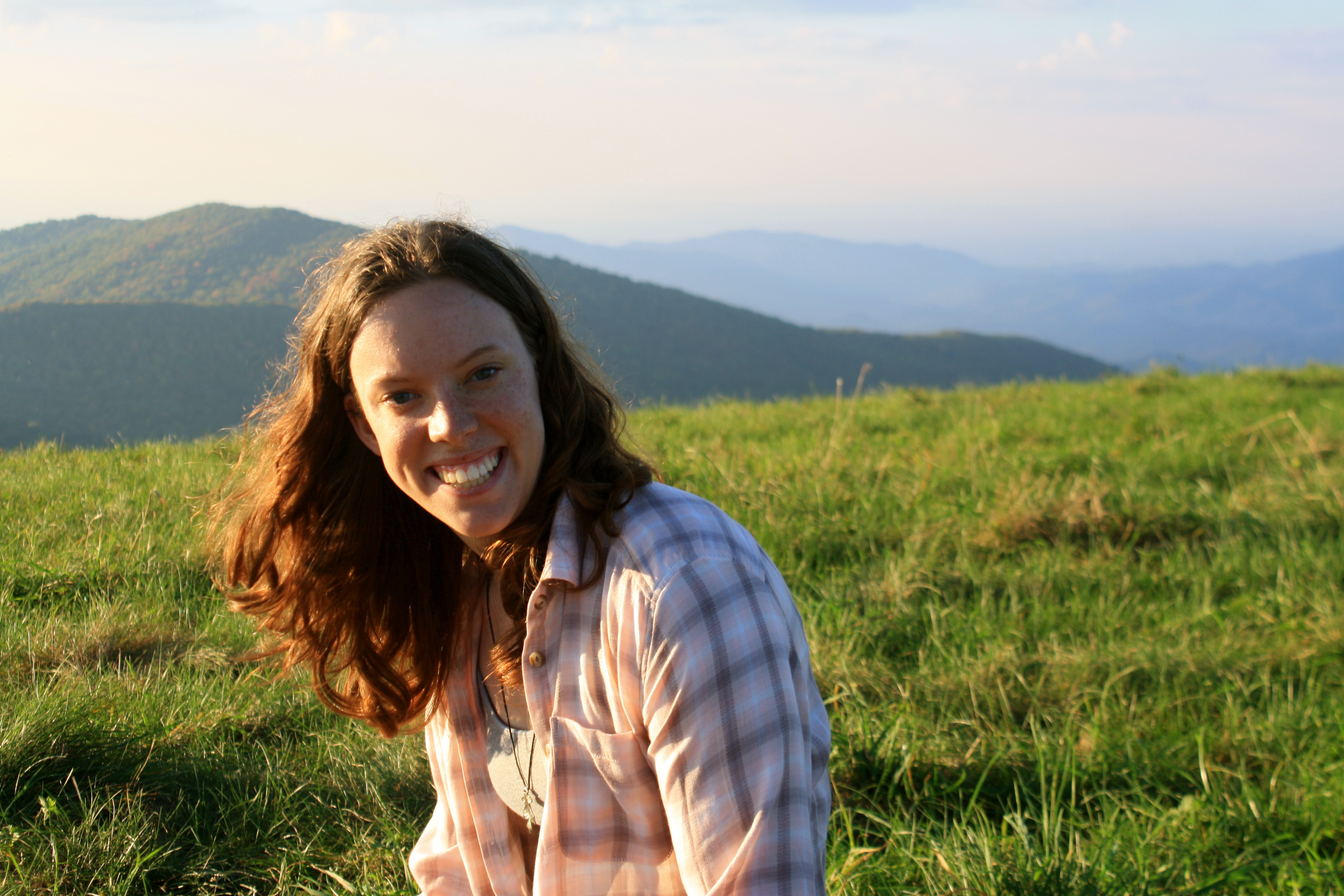
At the top of Max Patch (October 2013)
 lifeintheblueridges